Your Fancy Running Shoes Might Be Holding You Back — Here's What the Research Actually Says
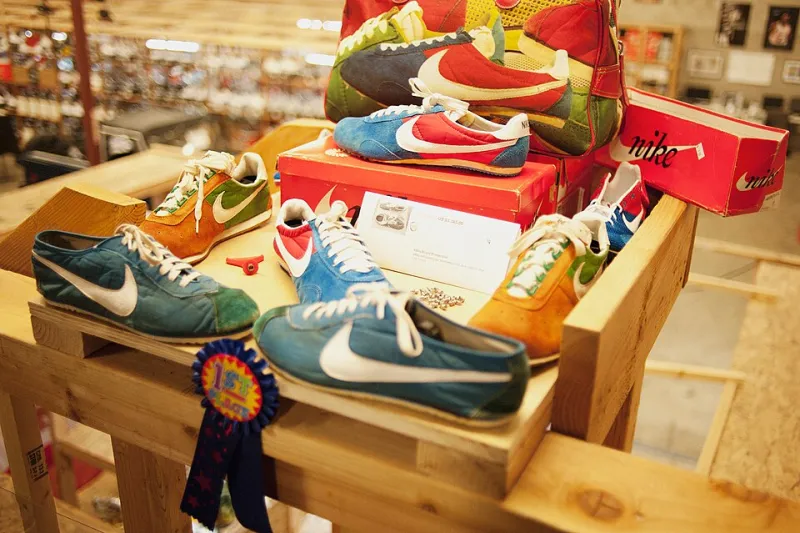
Photo: Alan Nakkash, CC BY-SA 2.0, via Wikimedia Commons
Walk into any running store in America and you'll be greeted by a wall of shoes that looks more like a tech expo than a footwear display. Carbon fiber plates. Nitrogen-infused foam. "Energy return" ratings. Stability pods. And price tags that start around $130 and climb cheerfully past $250.
The pitch is irresistible: buy the right shoe, and running gets easier, injuries disappear, and performance improves. It's a compelling story. It's also one that the fitness industry has been perfecting — and profiting from — for decades.
But here's the thing nobody at the shoe wall is going to tell you: the science backing up most of those claims is a lot thinner than the marketing budget.
The Billion-Dollar Story We've Been Sold
The modern running shoe as we know it barely existed before the 1970s. Nike, Adidas, and a handful of competitors essentially invented the premium athletic footwear category — and with it, the idea that your foot needed significant technological intervention just to function properly.
Since then, the global athletic footwear market has ballooned to well over $100 billion annually. In the US alone, Americans spend billions each year on running and training shoes, many of them chasing the promise of injury prevention or improved performance.
The problem? Independent research hasn't been especially kind to those promises.
A widely cited review published in the British Journal of Sports Medicine found no strong evidence that motion-control or stability shoes reduce injury rates compared to neutral shoes chosen based on comfort. A separate body of research on cushioning — one of the biggest selling points for premium footwear — suggests that more cushioning can actually alter your natural gait in ways that may increase certain types of impact stress, not reduce it.
None of this means expensive shoes are worthless. But it does mean the gap between a $60 pair of New Balances and a $190 pair of Hokas might be a lot smaller than the marketing suggests.
The Real Barrier Is Never the Shoe
Here's where it gets genuinely interesting — and a little uncomfortable for the industry.
For a lot of Americans, premium gear has quietly become a psychological barrier to movement. The logic goes something like this: I can't really start running until I get the right shoes. And when I get the right shoes, I'll need the right socks, the right shorts, the right app... Before long, starting a fitness habit feels like launching a small business.
This is not accidental. Gear culture — amplified by social media, influencer marketing, and the general aestheticization of wellness — has made looking the part feel like a prerequisite to playing the part.
But consistency, not equipment, is the single most reliable predictor of fitness outcomes. A person who walks 30 minutes a day in $45 sneakers from Target is going to see far more health benefit than someone who buys $200 shoes and uses them twice before the motivation fades.
Movement is the medicine. The shoes are just the container.
Real People, Simpler Gear, Real Results
Talk to enough regular exercisers and you'll start hearing a pattern.
Marcus, a 38-year-old teacher from Columbus, Ohio, spent two years cycling through premium running shoes trying to fix persistent knee pain. He tried stability shoes, then motion-control shoes, then a "maximalist" cushioning model that felt like running on marshmallows. Nothing worked.
What finally helped? A physical therapist who told him the shoes weren't the problem — his hip strength and running form were. He went back to a basic, mid-range neutral shoe, started doing hip strengthening exercises three times a week, and ran his first pain-free 5K eight months later.
"I probably spent $600 on shoes chasing a fix that cost me nothing," he says.
Similar stories pop up everywhere. People who stripped back their gear, focused on form and gradual progression, and found that fitness got simpler — and more sustainable — as a result.
What to Actually Look for in a Shoe
None of this means you should run barefoot or buy the cheapest thing on the clearance rack without thinking. Footwear does matter — just not in the way the industry wants you to believe.
Here's a practical framework for choosing functional shoes without overpaying:
Prioritize fit over features. The most important thing a shoe can do is fit your foot well. It should feel comfortable immediately — not "break in" comfortable, but genuinely comfortable. Your toes should have room to spread. Your heel shouldn't slip.
Comfort is a legitimate data point. Research actually supports choosing shoes based on comfort rather than technical specs. Your body tends to self-select gait patterns that reduce discomfort, which means a shoe that feels good is doing its job.
You don't need to spend more than $80–$100. Brands like New Balance, Brooks, Saucony, and ASICS all make solid, well-reviewed running and training shoes in that range. The $160+ versions from the same brands often offer marginal differences in materials and cushioning compounds that most recreational exercisers will never notice.
Match the shoe to the activity. A running shoe and a cross-training shoe serve different purposes. Running shoes are built for forward motion; cross-trainers offer more lateral support for gym work, HIIT, or court sports. Using the right category matters more than buying a premium version within that category.
Ignore the treadmill gait analysis upsell. Many specialty running stores offer in-store gait analysis as justification for steering you toward pricier stability or motion-control models. The research on these recommendations is mixed at best. If a store rep insists you need a specific $180 shoe based on a 30-second treadmill observation, take that with a large grain of salt.
The Bigger Picture
The fitness industry — shoes included — has a complicated relationship with accessibility. On one hand, high-quality gear genuinely exists and can enhance performance at elite levels. On the other hand, the marketing of that gear has filtered down to recreational exercisers in ways that create unnecessary cost and psychological friction.
For everyday Americans trying to move more, feel better, and build sustainable habits, the message should be simple: the bar to entry is lower than you've been told.
You don't need the latest carbon-plated super shoe. You don't need to wait until you can afford the "right" gear. You need a pair of shoes that fit, a surface to move on, and the willingness to start.
The most powerful fitness tool you own isn't in a shoe box. It's the decision to show up consistently — in whatever shoes you've already got.
Start there. The gear conversation can wait.