Why Your Body Turns Into a Brick Wall Every Afternoon — And What to Do About It

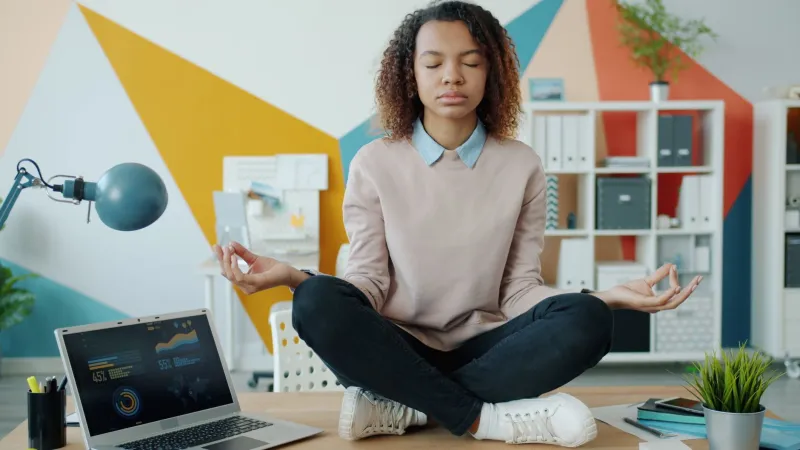
It happens like clockwork. You're sitting at your desk, maybe halfway through your second coffee, and somewhere around 3 PM your body just... seizes up. Your neck feels like concrete. Your hips ache when you stand. Every movement takes a little more effort than it should.
You probably blame the chair. Or the screen. Or — let's be honest — you quietly wonder if this is just what getting older feels like.
Here's the thing: it's probably none of those things. What you're actually bumping into is your circadian rhythm doing exactly what it's designed to do — and once you understand what's happening under the hood, you can actually use it to your advantage.
Your Body Has a Daily Performance Schedule (Whether You Know It or Not)
Your circadian rhythm isn't just about sleep. It's a 24-hour biological program that regulates everything from your core body temperature to your hormone output to how loose or tight your muscles and connective tissue feel at any given moment.
Here's a rough sketch of what's happening inside you on a typical day:
- Early morning (6–9 AM): Cortisol spikes hard. This is your body's natural alarm system — it ramps up alertness and gets you moving. But your core body temperature is still relatively low, which means your muscles and joints are less pliable than they'll be later.
- Late morning to early afternoon (10 AM–1 PM): Cortisol starts to taper. Muscle temperature rises. Reaction time, coordination, and flexibility all tend to peak.
- Mid-afternoon (2–4 PM): This is where things get interesting. Cortisol dips to one of its lowest points of the day. Energy can feel sluggish. And without that hormonal push, your body naturally pulls back — including your muscles, which can feel tighter and harder to move.
- Late afternoon (4–6 PM): Core body temperature typically hits its daily high point. Muscle strength, cardiovascular efficiency, and flexibility often reach their peak performance window.
That 3 PM slump you feel? It's not laziness. It's cortisol and body temperature doing a synchronized dip at the same time.
What Cortisol Has to Do With How You Move
Cortisol gets a bad reputation — mostly because we hear about it in the context of chronic stress and weight gain. But in normal, healthy rhythms, it plays a key role in keeping inflammation in check and helping your muscles respond quickly.
When cortisol drops mid-afternoon, your body temporarily loses some of that anti-inflammatory buffer. Joints that were moving freely in the morning can start to feel achier. Muscles that loosened up after your morning routine may feel like they've tightened back down.
Add in the fact that most Americans have been sitting for several hours by this point — compressing hip flexors, rounding the thoracic spine, letting the glutes essentially go offline — and you've got a perfect storm of biological timing and physical position working against you.
The Timing of Your Movement Matters More Than You Think
Most fitness advice treats the when of exercise as an afterthought. But research suggests that syncing your workouts with your body's natural rhythms can meaningfully affect performance and how good you feel afterward.
If your goal is strength or high-intensity training, late afternoon (roughly 4–6 PM) tends to be a sweet spot for a lot of people. Muscle power output is higher, reaction time is faster, and your body is genuinely more prepared to handle load.
If you prefer morning workouts, that's totally fine — just know your body needs a longer warm-up. Cold muscles and joints in the morning are more injury-prone, so spending 10 to 15 minutes on dynamic movement before you go hard isn't optional, it's smart.
And that 3 PM window? Rather than fighting through the slump with another cup of coffee, consider treating it as a cue to move — not intensely, but deliberately.
The 3 PM Fix That Actually Works
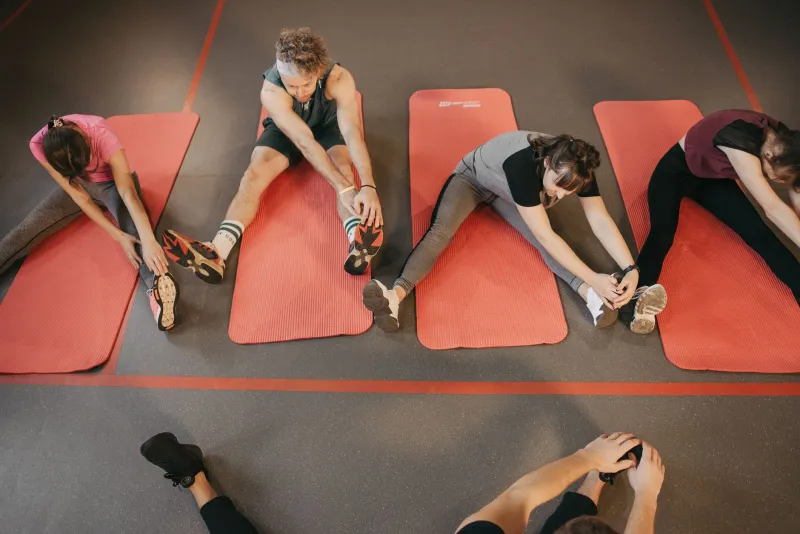
You don't need a gym. You don't need a foam roller the size of a log. What you need is about five to eight minutes of intentional movement that addresses what sitting has done to your body.
Try this sequence when the afternoon stiffness hits:
1. Hip flexor stretch (90/90 position): Sit on the floor with both knees bent at 90 degrees, one in front and one to the side. Hold for 60 seconds per side. This directly counteracts the hip compression from sitting.
2. Thoracic rotation: Sit cross-legged, place your hands behind your head, and slowly rotate your upper body left and right. Ten reps per side. Your mid-back will thank you.
3. Glute bridges: Lie on your back, feet flat on the floor, and drive your hips up. Hold at the top for two seconds. Do 15 reps. This reactivates the glutes that have been sleeping in your chair all day.
4. Doorway chest opener: Stand in a doorframe, place your forearms on either side, and gently lean forward until you feel a stretch across your chest and shoulders. Hold for 30 seconds.
This isn't a workout. It's a biological reset — and it works because it's timed to when your body actually needs it.
A Note on Flexibility Training and Timing
If you're doing dedicated stretching or mobility work, afternoon is genuinely the better time for it from a physiological standpoint. Your muscles are warmer, your nervous system is less guarded, and you're more likely to make real progress on range of motion.
Morning stretching isn't useless — it can feel great and help you shake off sleep stiffness. But if you're trying to actually improve flexibility over time, the afternoon window gives you a biological edge.
Working With Your Clock, Not Against It
The takeaway here isn't that you need to overhaul your entire schedule. It's that your body is running a program you didn't write, and learning to read it makes everything easier.
That 3 PM wall isn't a character flaw. It's not aging. It's not a sign your fitness routine is broken. It's a predictable dip in a daily biological cycle — one that responds really well to a few minutes of targeted movement and a little awareness.
Your internal clock is always ticking. You might as well learn to keep time with it.